

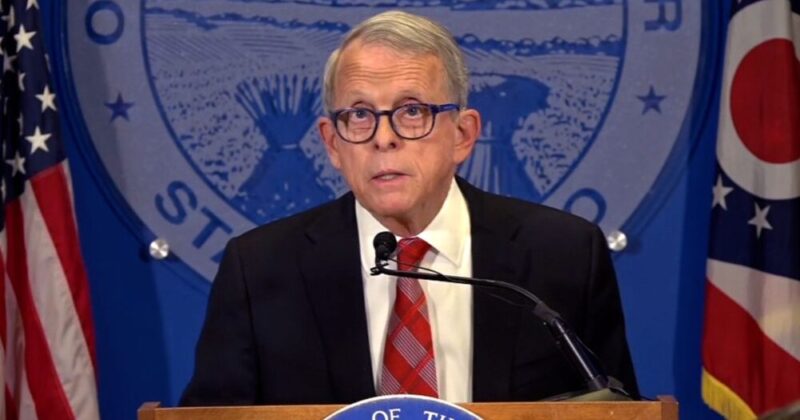
Ohio Governor Mike DeWine is facing intense backlash for claiming that Haitian nationals set to be deported by the Trump Administration are the backbone of the state’s economy.
DeWine’s comments come as thousands of Haitian nationals are set to lose their temporary immigration status, which will make them eligible for deportation.
Temporary Protected Status is a humanitarian program established under the Immigration Act of 1990. It allows nationals of designated countries experiencing armed conflict, environmental disasters, or other extraordinary conditions to temporarily live and work in the U.S. without fear of deportation.
For Haitians, TPS was first granted in 2010 following a devastating earthquake that killed over 200,000 people and displaced millions. Subsequent extensions were made by the Biden Administration, which cited issues like hurricanes, political instability, and gang violence that have rendered Haiti unstable.
The end of TPS for Haitians was announced last year by the Department of Homeland Security (DHS) under Secretary Kristi Noem, with termination set for February 3, 2026. This decision aimed to revert to the program’s “temporary” intent, arguing that conditions in Haiti had improved sufficiently.
If implemented, the termination would strip legal status from TPS holders, making them ineligible to work legally and subjecting them to deportation proceedings.
A day before TPS protections were set to expire, U.S. District Judge Ana C. Reyes issued a stay blocking the termination, ruling it “null, void, and of no legal effect” pending further judicial review. In a controversial opinion that largely focused on emotional rhetoric and accusing Noem of “racism,” the judge opted to keep protections in place for now.
The administration will appeal and will likely emerge victorious, as they have done in previous court cases relating to TPS status for foreign nationals.
Estimates indicate that approximately 330,000 to 350,000 Haitians hold TPS, with some sources citing up to 400,000 when including pending applications. If TPS ultimately ends without extensions or alternative relief, nearly all of these individuals could become eligible for deportation, barring other immigration options like asylum claims.
In Ohio alone, around 12,000 to 15,000 Haitians in Springfield and surrounding areas could be impacted. Springfield featured prominently in the 2024 presidential election, when resident concerns over the flood of Haitian nationals and missing pets dominated headlines.
The town ultimately shifted dramatically to the right in 2024, though Governor DeWine, a Republican, has continuously lobbied for the Haitians to stay. “My position hasn’t changed. I think taking away TPS would be a mistake,” he stated in a recent interview with CNN.
The governor went on to suggest that Haitians are more valuable to the economy than American workers. “If you look at the growth in Ohio, over half the growth is immigrants,” DeWine claimed.
DeWine has also called for larger immigration reform, including the possibility of amnesty for foreign workers. “I think this is an appropriate time for the country to examine legal immigration. We’ve kind of put that off for a long period of time,” he said.
Despite his opposition to the move, DeWine has pledged to comply with court orders.
Ohio’s ‘Republican’ Governor Mike DeWine says that we can’t end TPS for Haitians because Ohio’s economy depends on foreigners.
The reason we’ve gotten to where we are is because too many ‘Republicans’ simply view our nation as numbers on a balance sheet. pic.twitter.com/LXgIkZfr7T
— Theo Wold (@RealTheoWold) February 5, 2026
